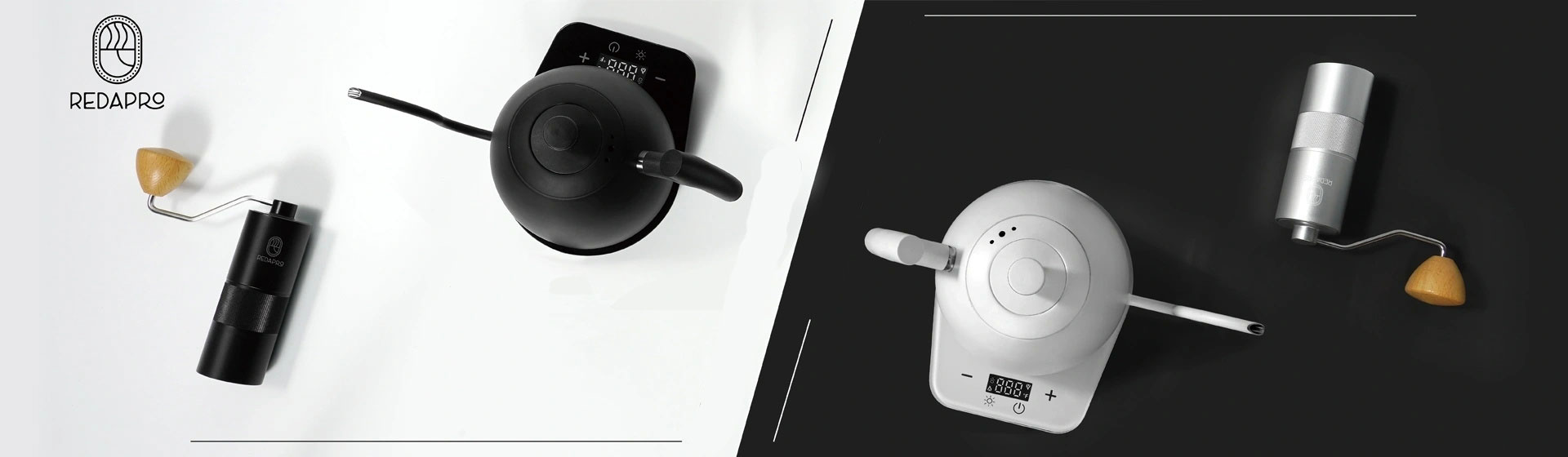
When choosing an Electric Kettle, glass and stainless steel are the two most common materials considered by overseas buyers. Each option offers distinct advantages in terms of safety, durability, performance, and user experience. For importers, brand owners, and distributors, understanding these differences is essential for selecting the right product positioning and long-term supply strategy.
As a manufacturer with long-term experience in stainless steel kettle production and coffee accessory manufacturing, our factory-based perspective provides practical insight into how these materials perform in real use and large-scale distribution.
Glass Electric Kettles typically use tempered or borosilicate glass combined with a metal base. The heating element is concealed under the base plate, while the body allows full visibility of the water.
From a manufacturing standpoint, glass kettles require:
Precise thickness control to prevent breakage
Higher packaging protection during shipping
Strict handling standards in logistics and warehousing
While visually appealing, glass introduces more constraints in bulk transportation and after-sales risk management.
Stainless steel electric kettles use food-grade stainless steel interiors, often with double-wall or single-wall construction. This structure is more tolerant of impact, vibration, and long-distance shipping.
In factory production, stainless steel kettles offer:
Stable forming and welding processes
Higher consistency in batch production
Lower breakage rate during export logistics
For OEM and ODM projects, stainless steel provides greater flexibility in structure and finish.
Durability is one of the most decisive factors for overseas markets.
Glass kettles, even when made from reinforced materials, remain inherently fragile. Accidental drops, thermal shock, or improper handling during distribution can result in cracks or breakage.
Stainless steel kettles are significantly more resistant to:
Physical impact
Temperature fluctuation
Long-term daily use
From a supplier perspective, stainless steel kettles deliver lower return rates and longer service life, which is especially important for B2B buyers and private-label programs.
Glass is chemically inert and does not react with water, which appeals to consumers focused on purity and visibility.
Food-grade stainless steel, when properly selected and processed, is also highly safe. In industrial production, stainless steel interiors are widely used in cookware, beverage equipment, and professional coffee tools due to their:
Corrosion resistance
High temperature stability
Non-reactive surface under boiling conditions
In practical testing and mass production, stainless steel offers a more balanced combination of safety and structural reliability.
Glass kettles allow users to visually observe boiling, but the material itself does not improve heating speed.
Stainless steel kettles retain heat more effectively. The metal body reduces heat loss during operation, allowing:
Faster temperature rise
More stable boiling behavior
Better energy efficiency over repeated use
For daily use scenarios such as coffee preparation, tea service, and hospitality environments, this efficiency advantage is significant.
Limescale buildup affects all kettles, regardless of material.
Glass kettles make scale more visible, which can prompt users to clean more frequently. However, stains and water marks are also more noticeable.
Stainless steel kettles:
Hide scale visually but maintain smooth internal surfaces
Withstand regular descaling without surface damage
Perform better in regions with hard water
From a manufacturing and after-sales standpoint, stainless steel interiors are easier to maintain consistently across different user habits.
Boiling noise is influenced by both heating structure and material resonance.
Glass kettles tend to amplify bubbling sounds due to rigid transparent walls. Stainless steel bodies distribute vibration more evenly, resulting in:
Lower perceived noise
More stable operation during rapid boiling
This difference becomes noticeable in high-power kettles designed for fast heating.
For overseas independent brands and importers, product reliability during shipping is critical.
Glass kettles require:
Thicker packaging
Higher freight protection costs
Greater risk of transit damage
Stainless steel kettles are better suited for:
Long-distance export
High-volume container loading
OEM and ODM customization with consistent quality
As a manufacturer with in-house stainless steel production capability, our experience shows that stainless steel kettles achieve better cost control and supply stability for international markets.
From a consumer perspective, glass kettles appeal to design-driven buyers who value visual experience.
From a manufacturing, exporting, and long-term usage perspective, stainless steel electric kettles are generally the better choice due to:
Higher durability
Safer logistics performance
Stable mass production
Lower after-sales risk
This is why stainless steel remains the dominant material in professional coffee equipment, commercial beverage tools, and export-oriented electric kettles.
Both glass and stainless steel electric kettles have their place in the market. Glass emphasizes visibility and aesthetics, while stainless steel delivers durability, efficiency, and long-term reliability.
For overseas buyers, private-label brands, and distributors seeking consistent quality and scalable supply, stainless steel electric kettles provide a more dependable solution. With mature manufacturing processes, stable material performance, and strong adaptability to international logistics, stainless steel continues to be the preferred choice for global electric kettle production.